


5.000 yıllık Piramit Caral Şehri
- BAT-BulentTurgut

- 21 Eki 2023
- 5 dakikada okunur

Peru'daki Kutsal Caral Şehri. Neredeyse 5000 yaşında, Amerika'nın en eski şehridir ve Mısır'ın büyük Piramitlerinden bile öncedir. En büyüğü 150×160 metre ölçülerinde 6 piramit, 2 batık tören meydanı, yerleşim bölgesi ve bir sulama sistemi içerir

. Mezopotamya, Mısır, Çin ve Hindistan'ın insanlığın ilk uygarlıklarına yol açtığı antik tarih alanında yaygın olarak öğretilmektedir. Bununla birlikte, çok azı aynı zamanda ve bazı durumlarda bu toplumların bazıları ortaya çıkmadan önce başka bir büyük uygarlığın filizlendiğinin farkındadır – Amerika'nın bilinen ilk uygarlığı olan Peru, Supe'nin Norte Chico uygarlığı. Başkentleri, karmaşık tarım uygulamaları, zengin kültür ve altı büyük piramidal yapı, taş ve toprak platform höyükleri, tapınaklar, amfitiyatro, batık dairesel plazalar ve yerleşim alanları dahil olmak üzere anıtsal mimariyle tamamlanmış 5.000 yıllık bir metropol olan Kutsal Caral Şehriydi. Peru Pasifik kıyısındaki Lima'nın 200 mil kuzeyinde yer alan Supe Vadisi, 1905 yılında bölgedeki ilk arkeolojik keşifleri ortaya çıkaran Alman arkeolog Max Uhle tarafından araştırıldı. Ancak, birkaç on yıl sonrasına kadar, çok büyük bir buzdağının ucunu ortaya çıkaran tam ölçekli kazılar yapılmadı. 1970'lerde arkeologlar, başlangıçta doğal oluşumlar olarak tanımlanan tepelerin aslında basamaklı piramitler olduğunu ve 1990'larda büyük Caral şehrinin tüm boyutunun ortaya çıktığını keşfettiler. Ancak bir başka büyük sürpriz daha henüz gelmemişti-2000 yılında, bölgede bulunan kamış taşıma torbaları üzerinde yapılan radyokarbon tarihlemesi, Caral'ın MÖ 3.000 civarında başlayan Geç Arkaik döneme tarihlendiğini ortaya çıkardı. Caral şimdi Amerika'daki erken karmaşık bir toplumun en kapsamlı kanıtını sunmuştu.

Peru'nun Kutsal Caral Kentinin kalıntıları. Görüntü kaynağı .
Caral, Supe vadisi'nde tespit edilen ve yaklaşık 65 hektarlık bir alanı kaplayan 18 yerleşim yerinden biridir. Tesis, Supe Nehri'nin yemyeşil vadisine bakan kuru bir çöl terasında yer almaktadır. Son derece iyi korunmuş olan site, tasarımı ve mimarisinin karmaşıklığı açısından etkileyicidir. Şehrin planı ve piramidal yapılar ve seçkinlerin konutları da dahil olmak üzere bazı özellikleri, güçlü bir dini ideolojiyi simgeleyen törensel işlevlerin açık kanıtlarını gösteriyor.

Caral kompleksinin merkezi, devasa bir plazanın etrafına yerleştirilmiş altı büyük piramidin (platform höyükleri) bulunduğu merkezi bir halka açık alandan oluşur. Caral'ın kentsel planında hakim bir konumda bulunan höyüklerin en büyüğü 60 fit yüksekliğindedir ve tabanda 450 x 500 fit ölçülerindedir ve neredeyse dört futbol sahası büyüklüğünde bir alanı kaplar. Büyük piramidin tepesinden, Caral hükümdarları tüm şehri izleyebileceklerdi. 29 fit genişliğinde bir merdiven, bir atriyum ve kutsal bir sunak içeren bir dizi küçük odaya açılmaktadır. Sunak odasının zemininde, adakların bir zamanlar yakıldığı anlaşılan küçük bir delik vardır.
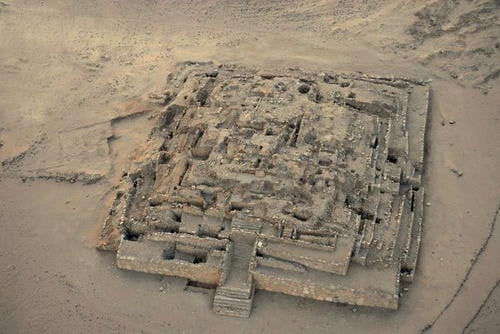
Büyük Caral Piramidi'nin kalıntıları. Görüntü kaynağı: Christopher Kleihege / UNESCO
Kamusal mimaride merdivenler, odalar, avlular, bir amfitiyatro ve üç batık plaza bulunmaktadır. Konaklama, seçkinler için piramitlerin tepesindeki geniş odalardan, zanaatkarlar için yer seviyesindeki komplekslerden ve işçiler için dışarıdaki küçük konutlardan oluşuyor gibi görünüyor. Toplamda, Caral'ın yaklaşık 3.000 kişilik bir nüfusa ev sahipliği yaptığı tahmin edilmektedir. Araştırmacılar, şehir modelinin Kuzey Chico'dan sonra gelen birçok uygarlık tarafından kullanıldığına inanıyor. 2001 yılında Supe'deki Kutsal Caral Şehri, UNESCO'nun Dünya Mirası Listesine dahil edildi. UNESCO yazıyor:
"Kutsal Caral-Supe Şehri, Amerika'daki medeniyetin yükselişini yansıtıyor. Tamamen gelişmiş bir sosyo-politik devlet olarak, karmaşıklığı ve Supe Vadisi boyunca ve ötesinde gelişen yerleşimler üzerindeki etkisi ile dikkat çekicidir ... Şehrin hem mimari hem de mekansal bileşenlerinin tasarımı ustalıktır ve anıtsal platform höyükleri ve girintili dairesel mahkemeler, konsolide bir yapının güçlü ve etkili ifadeleridir. eyalet.”
The 5,000-year-old Pyramid City of Caral
The Sacred City of Caral in peru. At almost 5000 years old, it’s the oldest city in the Americas and predates even the great Pyramids of Egypt. It includes 6 pyramids, the largest of which measures 150×160 meters, 2 sunken ceremonial plazas, residential districts and an irrigation system It is widely taught in the field of ancient history that Mesopotamia, Egypt, China, and India, gave rise to the first civilizations of mankind. However, few are aware that at the same time, and in some cases before some of these societies emerged, another great civilization had sprouted – the Norte Chico civilization of Supe, Peru – the first known civilization of the Americas. Their capital was the Sacred City of Caral – a 5,000-year-old metropolis complete with complex agricultural practices, rich culture, and monumental architecture, including six large pyramidal structures, stone and earthen platform mounds, temples, amphitheatre, sunken circular plazas, and residential areas. The Supe Valley, which lies 200 miles north of Lima on the Peruvian Pacific coast, was surveyed in 1905 by the German archaeologist Max Uhle, who revealed the first archaeological discoveries in the area. However, it was not until several decades later that full-scale excavations took place, revealing the tip of a very large iceberg. In the 1970s, archaeologists discovered that the hills originally identified as natural formations were actually stepped pyramids, and by the 1990s the full extent of the great city of Caral had emerged. But another great surprise was yet to come – in the year 2000, radiocarbon dating carried out on reed carrying bags found at the site revealed that Caral dated back to the Late Archaic period beginning around 3,000 BC. Caral had now provided the most extensive evidence of an early complex society in the Americas. The remains of the Sacred City of Caral, Peru. Image source .
Caral is one of 18 settlements identified in the Supe valley, covering an area of around 65 hectares. It is situated on a dry desert terrace overlooking the lush valley of the Supe River. Exceptionally well-preserved, the site is impressive in terms of its design and the complexity of its architecture. The city’s plan and some of its features, including pyramidal structures and residences of the elite, show clear evidence of ceremonial functions, signifying a powerful religious ideology. The centre of the Caral complex consists of a central public area with six large pyramids (platform mounds) arranged around a huge plaza. The largest of the mounds, located in a dominating position within the urban plan of Caral, is 60 feet high and measures 450 x 500 feet at the base, covering an area nearly the size of four football fields. From the top of the great pyramid, the rulers of Caral would have been able to monitor the entire city. A 29-foot wide staircase opens into a series of small rooms, which include an atrium and a sacred altar. The altar room has a small hole in the floor, in which it appears that offerings were once burned. Remains of the Great Pyramid of Caral. Image source: Christopher Kleihege / UNESCO
The public architecture has stairs, rooms, courtyards, an amphitheatre, and three sunken plazas. Accommodation seems to have consisted of large rooms atop the pyramids for the elite, ground-level complexes for craftsmen, and small outlying dwellings for workers. In total, it is estimated that Caral was home to a population of about 3,000 people. Researchers believe the model of the city was used by many civilizations that came after the Norte Chico.
In 2001, the Sacred City of Caral in Supe was inscribed on UNESCO’s World Heritage List. UNESCO writes:
“The Sacred City of Caral-Supe reflects the rise of civilisation in the Americas. As a fully developed socio-political state, it is remarkable for its complexity and its impact on developing settlements throughout the Supe Valley and beyond… The design of both the architectural and spatial components of the city is masterful, and the monumental platform mounds and recessed circular courts are powerful and influential expressions of a consolidated state.”
Yorumlar